REGULATORY
A First-in-Nation Battery Law Hits Illinois Utilities
ComEd and Ameren must file virtual power plant tariffs by June 1, 2026, offering $300/kWh battery rebates under Illinois's new grid law
18 Jun 2026
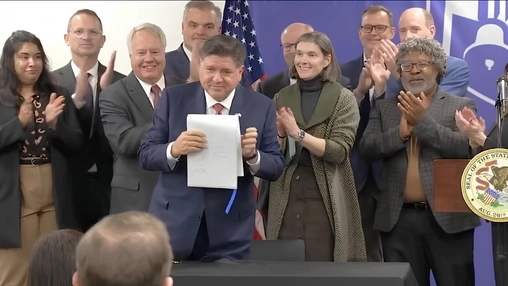
Illinois became the first state in the nation to impose a statutory virtual power plant mandate on its major utilities, a step that reshapes how residential battery storage connects to grid operations across the Midwest. Governor J.B. Pritzker signed the Clean and Reliable Grid Affordability Act on January 8, 2026, setting firm deadlines and financial incentives that draw homeowners directly into peak-demand management. Backed by statute rather than voluntary targets, the program marks a departure from the incremental approaches other states have pursued.
ComEd and Ameren were required to file scheduled dispatch tariff proposals with the Illinois Commerce Commission by June 1, 2026, with approval mandated no later than June 30. Those deadlines carry statutory weight. Filing within the window means customers could see formal program structures in place before summer heat drives grid stress to its seasonal peak, a period when demand curves grow volatile and grid operators have the least margin for error.
Residential battery customers who enroll and participate in dispatch events are eligible for rebates of $300 per kilowatt-hour of installed capacity, a figure that measurably reduces upfront installation costs. Home battery systems typically run several thousand dollars before incentives are applied, a barrier that has deterred many households from committing to storage technology. Broader enrollment strengthens reliability while reducing dependence on expensive peaker plants during high-demand periods, analysts said.
Contractors, solar installers, and energy consultants across the state stand to benefit as residential demand for battery systems accelerates. For businesses in commercial real estate, property management, and building services, the mandate opens downstream opportunities tied to tenant energy upgrades and building electrification that did not exist before the law took effect. Market observers expect measurable storage deployment well ahead of Illinois's 2030 capacity targets, and the program's structure could offer a template for other states weighing similar requirements in the years ahead.
Related News


topics on the agenda
THE RISE OF EMBEDDED VPPS: ACTIVATING GRID CAPACITY AT THE POINT OF SALE
DAY 1: undefined
09:00 - 09:25
POWERING THE FUTURE: INTELLIGENT ENERGY MANAGEMENT FOR EV CHARGING
DAY 1: undefined
09:30 - 09:55
FROM FORECASTS TO AUTONOMOUS GRID DECISIONS BUILDING AI-DRIVEN VIRTUAL POWER PLANTS
DAY 1: undefined
11:30 - 11:55
SUBSCRIBE FOR UPDATES
By submitting, you agree to receive email communications from the event organizers, including upcoming promotions and discounted tickets, news, and access to related events.